-

Noark
FSB9
Flexible Shaft Type B (9 ft)
$120.38$166.78 -

Noark
FST10
Flexible Shaft for Operating One Breaker or Two Breakers (10 ft)
$106.65$148.26 -
Noark
FST4
Flexible Shaft for Operating One Breaker or Two Breakers (4 ft)
$94.64$105.16 -

Noark
FST5
Flexible Shaft for Operating One Breaker or Two Breakers (5 ft)
$101.43$112.70 -
Noark
FST6
Flexible Shaft for Operating One Breaker or Two Breakers (6 ft)
$108.21$120.23 -

Noark
FST7
Flexible Shaft for Operating One Breaker or Two Breakers (7 ft)
$114.98$127.76 -
Noark
FST8
Flexible Shaft for Operating One Breaker or Two Breakers (8 ft)
$96.46$133.20 -
Noark
FST9
Flexible Shaft for Operating One Breaker or Two Breakers (9 ft)
$126.66$140.73 -

Noark
HM1A
Handle Operating Mechanism (10x10mm)
$26.26$36.15 -

Noark
HM2HVA
Handle Operating Mechanism for M2HV (10×10mm²)
$61.73$68.59 -

Noark
HM3B
Handle Operating Mechanism (12x12mm)
$56.07$77.42 -

Noark
HM3HVB
Handle Operating Mechanism for M3HV (12×12mm²)
$76.19$84.66 -

Noark
HM4B
Handle Operating Mechanism (12x12mm)
$65.09$89.73 -

Noark
HMD1A
Handle Operating Mechanism (10x10mm)
$62.99 -

Noark
HMD2A
Handle Operating Mechanism (10x10mm)
$38.04$42.27 -

Noark
IHM1
NFPA 79 Internal Handle Mechanism for M1
$52.64$58.49 -

Noark
IHM2
NFPA 79 Internal Handle Mechanism for M2
$59.94$66.60 -

Noark
IHM3
NFPA 79 Internal Handle Mechanism for M3
$110.41$122.68 -

Noark
IHM4
NFPA 79 Internal Handle Mechanism for M4
$103.52$144.27 -

ABB
K8C048
Os/Ot 800-1200A Flange Cable 48 Inc
$445.01$660.63 -

ABB
K8C096
Os/Ot 800-1200A Flange Cable 96 Inc
$720.26$1,066.05 -

ABB
K9FCH
Os/Ot 800-1200A Flange Handle 1/12/
$712.20$1,057.27 -

ABB
KIG-2
Cable Hub
$369.93$649.72 -

Noark
KLK21NA
Handle Lock UL 489, M1, Off
$16.07 -

Noark
KLK21NB
Handle Lock UL 489, M1, On/Off
$26.26$36.15 -
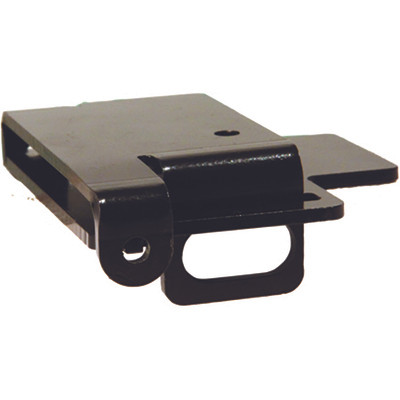
Noark
KLK21NC
Handle Lock UL 489, M1, On
$19.92 -

Noark
KLK22NA
Handle Lock UL 489, M2, Off
$16.07 -

Noark
KLK22NB
Handle Lock UL 489, M2, On/Off
$32.54
Fusible and Non-Fusible Disconnect Switches
What Is a Disconnect Switch
A disconnect switch is a manually operated device that completely isolates electrical equipment from its power source, letting you de-energize a circuit safely for maintenance, inspection, repair, or emergency shutdown. It creates a visible, verifiable break in the circuit. Unlike electronic switching, the physical separation of contacts confirms that no current can reach downstream equipment. The National Electrical Code requires disconnect switches for motor-driven equipment, and they must be installed within sight of the equipment they isolate.
Wistex supplies disconnect switches built to meet OSHA lock-out/tag-out requirements while providing safe, reliable isolation for industrial equipment. Choose from fusible, non-fusible, and motor disconnect options up to 2000 A, all available in NEMA 4X and NEMA 12 enclosures for harsh or dusty environments. With rapid shipping and expert guidance, Wistex ensures you get the right switch for the job. Need overcurrent protection? Pair your switch with one of our circuit breakers.
Fusible vs Non-Fusible Disconnect Switches
Fusible disconnect switches combine circuit isolation with overcurrent protection in a single device. Fuses are built into the switch mechanism, so the switch both isolates the circuit for maintenance and clears short circuits and overloads automatically. Non-fusible disconnect switches provide isolation only and rely on upstream devices, such as circuit breakers or motor starters, for overcurrent protection. A fusible switch is typically specified where short-circuit protection is needed at the point of service, such as at a service entrance or in high fault-current applications. Non-fusible switches are the more economical choice where overcurrent protection is already handled upstream, and are commonly used for motor leads. Wistex fusible switches accept Class J, R, and H fuses.
Disconnect Switches We Offer
Our selection includes trusted brands and enclosure styles to suit virtually any industrial application.

Fusible Safety Switches
Fusible disconnects provide short-circuit protection and meet NEC service entrance requirements. Ideal for high SCCR applications, these NF-rated switches accept a variety of fuse classes, including J, R, and H.
Non-Fusible Disconnects
Compact and economical, non-fusible disconnect switches offer a reliable means to manually isolate equipment for maintenance. These are commonly used for motor loads when protection is handled upstream.


Enclosed Motor Disconnects
These all-in-one motor disconnects combine a switch and enclosure, making them ideal for local servicing points on rooftop units, pump panels, or machinery.
Lock-Out/Tag-Out Compliance
Disconnect switches support lock-out/tag-out procedures through padlockable handles that can be secured in the OFF position, preventing accidental re-energisation while maintenance is underway. Clear ON and OFF position indication allows anyone approaching the equipment to confirm its state without opening the enclosure.
Applications for Disconnect Switches
Wistex disconnects are field-proven across a wide range of industrial and commercial systems.
- HVAC units
- Machine tools
- Pump panels
- Rooftop equipment
Complete your motor control system with contactors and soft starters.
Why Choose Wistex for Safety Disconnects
Wistex is trusted for code-compliant solutions that meet real-world demands. We stock a wide range of fusible and non-fusible disconnect switches, with amperages from 30 A to 2000 A, and enclosure options built for your environment. Our experts can help you build out complete solutions with fuse kits, mounting hardware, and made-in-USA selections, all ready to ship fast.
Disconnect Switch FAQs
Need help choosing or sizing a disconnect switch? Start with these commonly asked questions.
A fusible disconnect switch is typically required when short-circuit protection is needed at the point of service, such as service entrances or fault-current applications. Many local codes also specify fusing for added safety.
To size a switch, multiply your motor's Full Load Amps (FLA) by 115%, consider voltage and phase, and select the correct fuse class. Browse our 30A disconnect switch options or filter by amperage to find your match.
A disconnect switch provides a safe means to isolate power, but unlike a circuit breaker, it does not offer overcurrent protection. Disconnects are ideal for lock-out/tag-out compliance and scheduled maintenance.